Thursday, February 22, 2024

JNU organizes Pandit Hriday Nath Kunzru Memorial Lectures 2024 | 26 February to 01 March 2024

Pandit Hriday Nath Kunzru Memorial Lectures 2024


The School of International Studies, JNU, will be hosting the Pandit Hriday Nath Kunzru Memorial Lectures 2024 to celebrate its founding 70 years ago, in 1955. The flagship event of the School of International Studies, JNU, has been designed as an interface between the world of scholarship and the domain of policy making. Delivered by subject experts, the lecture series is open to the wider civil society. The theme of this year's series is:


India's Foreign Policy in a Fragmented Planet


Dates: 26 February 2024 to 01 March, 2024.
Venue: Convention Centre, JNU


Inaugural Address:
Dr S. Jaishankar,

Hon'ble Minister of External Affairs,
Government of India
on 26 February 2024 at 4 pm
 
Special Lecture:
Ambassador (Retd.) Kanwal Sibal,

Chancellor, JNU
on 28 February 2024 at 11 am


Valedictory Address:
Smt. Nirmala Sitharaman,

Hon'ble Minister of Finance and Corporate Affairs,
Government of India
on 01 March 2024 at 4 pm


Thematic Sessions:
SIS Faculty Members with expertise in the respective domain
between 27 February 2024 and 01 March 2024
from 11 am to 4.30 pm.

National Science Day 2024 Talk on "Indigenous Technology for Viksit Bharat" | 28 Feb, JNU

National Science Day 2024 Talk on "Indigenous Technology for Viksit Bharat" | 28 Feb, JNU

Tuesday, February 20, 2024

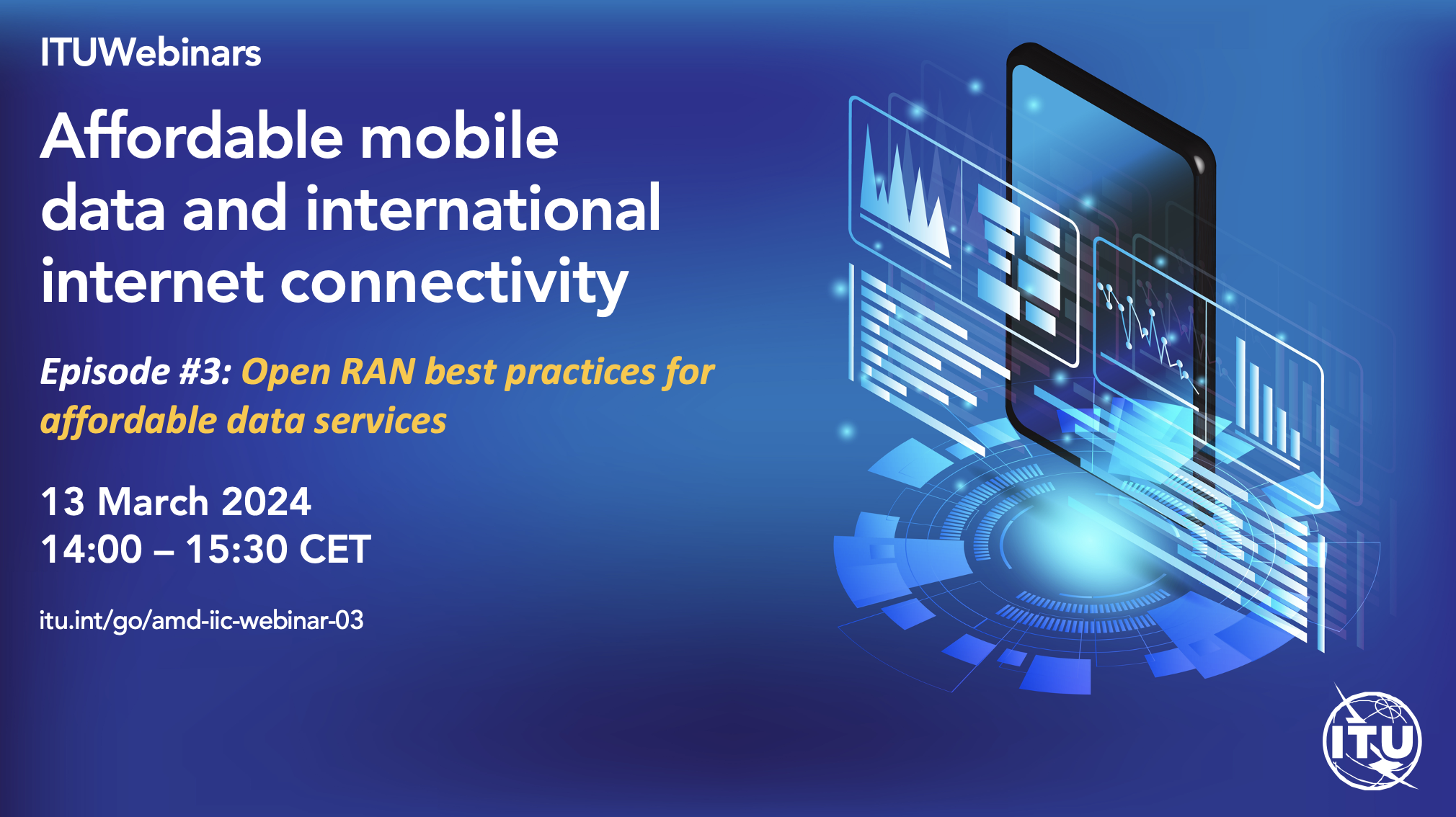
ITU-T Webinar on Open RAN Best Practices for Affordable Data Services | 13 March, 18:30 IST


The ITU-T Focus Group on Costing models for affordable data services is analyzing the supply-chain of telecom/ICT, the multiple cost models and pricing strategies used for mobile data services and Internet services and study the policy, economic, regulatory and standardization aspects related to cost models for affordable data services, including best practices of cost assessment methodologies and economic models. As part of its activities, the Focus Group is organizing a series of webinars focused on the areas of focus under study. The purpose of this webinar is to explore the topic of Open radio access network (RAN) and analyze its effects on the provision of accessible data services.

The third episode of this webinar series will focus on Open RAN best practices for affordable data services and will take place on 13 March 2024 from 14h00 to 15h30 CET. 

The Focus Group on Costing Models for Affordable Data Services is studying ways to optimize network costs, allowing the provision of more affordable services as well as enhancing environmental sustainability and reducing visual pollution in cities. Entities of the sector are firmly convinced that networks must adopt an open model, committing to both infrastructure sharing (active and passive) and the implementation of the Open RAN concept.

The potential benefits of Open RAN are widely understood – greater efficiency, more innovation, lower total cost of ownership. With the maturity of hardware and software open interfaces, Open RAN is poised for larger-scale implementations in macro networks. Multinational operators have incorporated Open RAN solutions in their network development plan and are actively testing or deploying the open interface technology to their LTE and 5G NR networks globally. Vodafone has deployed Open RAN sites in several countries. Telefonica plans to achieve 50% of the new RAN site deployments based on Open RAN between 2022 and 2025. Etisalat has run a production trial of Open RAN for all mobile generations. Open RAN could deliver up to 30% TCO savings for operators with the right platform strategy and skill set.

In this context, the webinar will explore Open RAN best practices, aimed at providing accessible data services. We want to discuss how to achieve affordable data services, along with deep dive into Open RAN specifications, architecture and interfaces. Discuss how to foster and promote additional efforts toward accessible data services through more open, programmable, virtualized, and efficient wireless networks.

Objectives:
Target audience: Telecom regulators, mobile network operators, industry associations, cost model experts, policymakers, Internet Exchange Point operators and Internet service providers


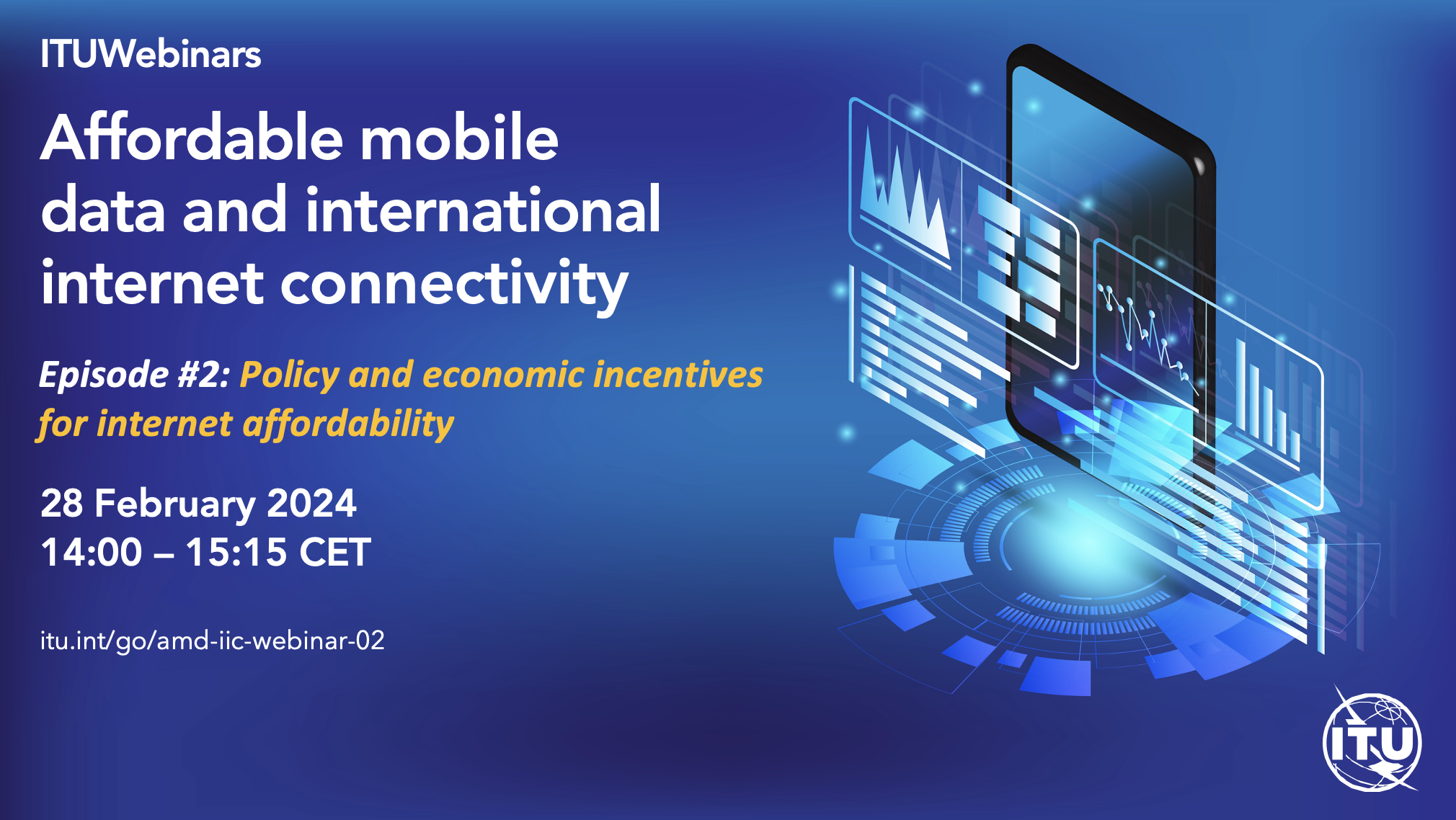
ITU-T Webinar on Policy and Economic Incentives for Internet Affordability | 28 February, 18:30 IST


The ITU-T Focus Group on costing models for affordable data services is analyzing the supply chain of telecom/ICT, the multiple cost models and pricing strategies used for mobile data services and Internet services as well as studying the policy, economic, regulatory, and standardization aspects related to cost models for affordable data services, including best practices of cost assessment methodologies and economic models. As part of its activities, the Focus Group is organizing a series of webinars targeting the areas of focus under study.

The purpose of the webinar is to explore how government policies and economic measures can influence the cost and accessibility of Internet services especially for landlocked developing countries (LLDCs) and small island developing states (SIDS).

The second episode of this webinar series will focus on Policy and economic incentives for internet affordability and will take place on 28 February 2024 from 18:30 IST. 

Efforts to enhance the affordability of international internet connectivity require a multifaceted approach incorporating both policy framework and economic incentives. Policymakers often aim to foster competition among service providers, encourage innovation, and drive down costs. Additionally, regulatory measures can promote infrastructure development ensuring that diverse regions have access to robust connectivity.

Economic incentives play a pivotal role in attracting private investment in the expansion and maintenance of Internet infrastructure. Governments may offer tax breaks or subsidies to incentivize companies to invest in underserved areas. Collaboration between government, private sector, and international organizations becomes essential to create a sustainable model that balances affordability and quality of service.

Therefore, striking the right balance between policy and regulatory frameworks and economic incentives is crucial for achieving an affordable and accessible internet.

Objectives of the webinar:
Target audience: Telecom regulators, mobile network operators, industry associations, cost model experts, policymakers, Internet Exchange Point operators and Internet service providers


Monday, February 19, 2024

IFLA Newsletter - Your 2023 Feedback and Insights

2023 Feedback time

We hope your 2024 has started well! We'd love to get a little feedback about your favourite IFLA newsletter issues last year and any other insight you want to provide.


Head over here for a very short (just 4 questions) survey, and if you provide your email address as well, you'll be in with a chance of winning some goodies!

Take survey

Thank you!

CfPs: Globelics-IndiaLICS Conference on Innovation Systems in Transforming India: Context, Concerns and Strategy | 20-21 September, Bhubaneswar

Globelics-IndiaLICS International Conference on Innovation Systems in Transforming India: Context, Concerns and Strategy
September 20-21, 2024 (Friday-Saturday)
Hosts: KIIT Bhubaneswar & Bhubaneswar City Knowledge Innovation Cluster, Odisha, India
Venue: Kalinga Institute of Industrial Technology (KIIT), Bhubaneswar, Odisha, India

Call for Papers & Research Proposals 
Indian growth story is world-wide discussed and is being recognized as a 'bright spot' in the world economy and a key contributor to global growth in coming years. However, there are grand challenges India must overcome to transition from a low middle income country to an advanced economy. Innovation and technological progress have played a significant role in this transition of the various industrial advanced and newly industrialized economies of the world. Increasing realizations over perspectives and role of innovations – including but beyond the technological – in impacting economies and societies at the macro, policies to address broad issues on innovation, aspects of local and sub-national dynamics are yet to receive due attention, especially in the absence of comprehensive statistics on innovation and related dimensions. Further, innovation potential of subsectors, regions, and resources (both physical and knowledge-based) has been poorly articulated as we have limited understanding of interrelationships between diverse stakeholders of science, social-economy and democracy. A common concern is 'over innovative governance' of access and use of resources (particularly, natural) to ensure broad basing of sustainable production, consumption and conservation. It also calls for looking more closely at the various successful initiatives that have led to emergence of new models and actors such as innovation clusters, TBIs, Startups and whether they have been able to bring a more inclusive governance framework.
IndiaLICS is the India chapter of Globelics, an international network of scholars who apply the concept of Learning, Innovation and Competence building System (LICS) as a framework for promoting inclusive and sustainable development in developing countries, emerging economies, and societies in transition. IndiaLICS engages in and pro-actively promotes domestic and global exchange of scholarship in innovation systems and the translation of innovation to development outcomes. It organizes seminars/conferences and undertakes capacity building activities as well as research with academics, policy makers, entrepreneurs and workers. For details, please visit: www.indialics.org
The Conference aims to be multidisciplinary in its approach by including scholars, practitioners, policy makers and development/civil society organizations. It would also showcase startups across various sectors and regions including from the rural economy. Although the focus is on India, lessons from other developing and developed countries shall be discussed in a comparative perspective. Papers shall be invited for presentation at the Conference and peer reviewed before acceptance. The Conference also invites papers on case studies of innovation clusters, technology business incubators, startups, etc. The Conference intends to bring out edited books through reputed publishers and special journal issues from selected papers presented.
Pertinent/Suggestive Themes by Broad Intersectional Categories:
  • National Level:
    • Innovation system in comparative perspective
    • Innovation, trade and development
    • Comprehensive database and indicators of innovation
    • Industry 4.0 technologies and Indian Innovation system
    • IPRs, standards & regulations
    • Foresights and futures for technology
    • Skills, knowledge and learning – gaps and solutions
    • Innovation activity and firm size in the context of changing technology regimes and market structures
    • Innovation and entrepreneurship in universities
  • Regional/Sub-national Level:
    • Global production networks and governance of value chains
    • Enterprise-academia-state-society interlinkages
    • State and STI
    • Regional Innovation system of India - assessment and challenges
    • Regional Innovation clusters
  • Sectoral/Sub-sectoral Level:
    • Skills, knowledge gaps in traditional and modern sectors
    • Innovations in agriculture, forestry, livestock and fisheries
    • Informal sector and innovation (both rural and urban contexts)
    • Innovation in services and business model innovation
    • Innovations in social sectors (education, health and water)
  • Overarching Concerns:
    • Science, technology and innovation links
    • Climate change and protecting the environment.
    • Gender and innovation
    • Inclusive and responsible innovation
    • Grassroot innovation
    • Frugal innovation and public policy
    • Creating and scaling deep tech startups
These are indicative themes only. Papers beyond these themes shall also be considered. Around 50-60 research papers are expected to be shortlisted for the Conference presentation. Certificates of participation shall be presented. The host institution shall take care of travel, boarding and conference organization as per the availability of financial support. The participants are encouraged to search for financial support from their own institutional or other funding agencies.

Important Dates:
  • Submission of extended abstracts or research proposals by June 15, 2024 (Full paper is preferred).
  • Information on acceptance/rejection of abstracts/proposals by June 25, 2024.
  • Submission of full papers by July 10, 2024.
  • Conference dates: September 20-21, 2024.

Format for Extended Abstract/Research Proposal:
The abstract/proposal (around 1000 words) must be new (neither published nor being submitted/considered for publication elsewhere) and should preferably be organised around the following subsections: (a) Central concerns (b) Methodology/Approach (c) Main findings (d) Policy implications (e) Originality/Value (f) Keywords (up to 5). Papers by young scholars are particularly encouraged.

Communications: All submissions and correspondences must be emailed to: indialics.kiit[@]gmail.com. Contact person: Keshab Das (Mobile: 94275 27884. Email: keshabdas[@]gmail.com)

Friday, February 16, 2024

IIHS Summer School 2024 - Call for Applications


If you are not able to see this mail, click here
­

­

IIHS is hosting a three-day Summer School on Energy Transitions in the Global South from 27-29 March 2024. Aimed at early-career researchers and practitioners in India, particularly those in advanced stages of their doctoral programmes, the Summer School focuses on transformative change.


Through interactive seminars, participant presentations, feedback sessions, and guest lectures, the sessions will empower participants with insights and knowledge to navigate the complexities of energy transitions in the Global South. Key themes include energy transitions, governance of energy systems, institutional capacity for energy equity, financial sustainability, social inclusion, scalability, replicability, technology, innovation, and equity.

Applications close on 1 March 2024.


For more information on eligibility and how to apply, click here. 

Apply Now


© 2024 Indian Institute for Human Settlements
IIHS BENGALURU: 197/36, 2nd Main Road, Sadashivanagar Bengaluru 560 080, India. P: +91 80 6760 6666 | F: +91 80 2361 6814
 Careers | Contact Us | Privacy Policy | iihs.co.in

­
­
­
­

This email was sent to stutih@ iihs.ac.in You received this email because you are registered with Indian Institute for Human Settlements


regards
Stuti Haldar
Postdoctoral Fellow

Indian Institute for Human Settlements
iihs.co.in

Twitter Facebook LinkedIn Youtube

IIHS BANGALORE CITY CAMPUS :: 197/36, 2nd Main Road, Sadashivanagar, Bangalore 560 080. India. T: +91 80 6760 6666 | F: +91 80 2361 6814 

IIHS CHENNAI :: Floor 7A, Chaitanya Exotica, 24/51 Venkatnarayana Road, T Nagar, Chennai 600 017. India. T +91 44 6630 5500/6555 6590 

IIHS DELHI :: 803 Surya Kiran, 19 Kasturba Gandhi Marg, New Delhi 110 001. India. T: +91 11 4360 2798 

IIHS MUMBAI :: Flat No.2, Purnima Building, Patel Compound, 20-C, Napean Sea Road, Mumbai 400 006. India. T: +91 22 6525 3874